Posts

Showing posts with the label Microsoft

Microsoft Azure outage takes down services across North America

Image
By Sergiu Gatlan,  Bleeping Computer ​Microsoft has mitigated an Azure outage that lasted more than two hours and took down multiple services for customers across North and Latin America. The company says the incident started around 18:22 UTC and impacted services that leverage Azure Front Door (AFD), its modern cloud Content Delivery Network (CDN). "This issue is impacting multiple geographies, mostly in North America and Latin America," Redmond explained when it first acknowledged the outage on the Azure status page, saying it was caused by what it described as a "configuration change." "We have rolled back this change and, from 19:25 UTC, the majority of services are seeing recovery. Many Microsoft services have failed away from AFD, in response to this issue." However, customers have also reported experiencing errors connecting to Azure services (including Azure DevOps) in the United Kingdom, with the Azure DevOps status page also tagging the issues ...

Microsoft says massive Azure outage was caused by DDoS attack

Image
By Sergiu Gatlan,  Bleeping Computer Microsoft confirmed today that a nine-hour outage on Tuesday, which took down and disrupted multiple Microsoft 365 and Azure services worldwide, was triggered by a distributed denial-of-service (DDoS) attack. Redmond says the outage impacted Microsoft Entra, some Microsoft 365 and Microsoft Purview services (including Intune, Power BI, and Power Platform), as well as Azure App Services, Application Insights, Azure IoT Central, Azure Log Search Alerts, Azure Policy, and the Azure portal. The company confirmed in a mitigation statement published today that the root cause behind yesterday's outage was a DDoS attack, although it has yet to link it to a specific threat actor. "While the initial trigger event was a Distributed Denial-of-Service (DDoS) attack, which activated our DDoS protection mechanisms, initial investigations suggest that an error in the implementation of our defenses amplified the impact of the attack rather than mitigating i...

Major Microsoft 365 outage caused by Azure configuration change

Image
By Sergiu Gatlan,  Bleeping Computer Microsoft says an Azure configuration change caused a major Microsoft 365 outage on Thursday, affecting customers across the Central US region. This massive outage started around 6:00 PM EST and prevented users from accessing various Microsoft 365 apps and services. The list of services impacted by the outage includes Microsoft Defender , Intune, Teams, PowerBI, Fabric, OneNote, OneDrive for Business, SharePoint Online, Windows 365, Viva Engage, Microsoft Purview, and the Microsoft 365 admin center. Xbox Support confirmed that the Xbox Live service was also hit by the issue, saying gamers had problems logging into their accounts. Throughout the outage, Downdetector has received tens of thousands of service issue reports, with affected Xbox users experiencing server connection issues and saying they couldn't log in. After acknowledging the outage, Microsoft said, "We're working on rerouting the impacted traffic to alternate systems to ...

AT&T delays Microsoft 365 email delivery due to spam wave

Image
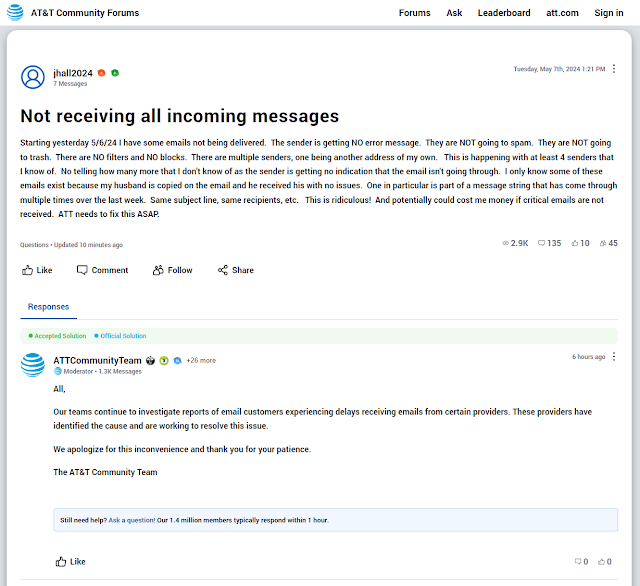
By Lawrence Abrams, Bleeping Computer AT&T's email servers are blocking connections from Microsoft 365 due to a "high volume" spam wave originating from Microsoft's service. Starting on Monday, AT&T customers began reporting they could no longer receive email from Microsoft 365 email addresses. When Microsoft 365 customers attempted to email an address at @att.com, @sbcglobal.net, or @bellsouth.com, AT&T servers would refuse the connection and not accept the email for delivery.

Why remote desktop tools are facing an onslaught of cyber threats

Image
By Solomon Klappholz, IT Pro Hackers are increasingly targeting remote desktop tools in their attacks, new research reveals, prompting warnings for enterprises globally In the era of hybrid work, remote desktop tools have become vital business enablers, but due to their pervasiveness on corporate networks they have become a popular entry point for cyber criminals. If successfully exploited, remote access tools can provide hackers with a direct pathway into a system or network, and once access is gained attackers can move laterally within the network, escalating privileges and maintaining persistence. In an investigation into which remote desktop tools are targeted the most, Jonathan Tanner, senior security researcher at Barracuda Networks, explained that remote desktop software poses a particular challenge to IT teams to secure. “Among the security challenges facing IT teams implementing remote desktop software is that there are many different tools available, each using different and ...

Bogus npm Packages Used to Trick Software Developers into Installing Malware

Image
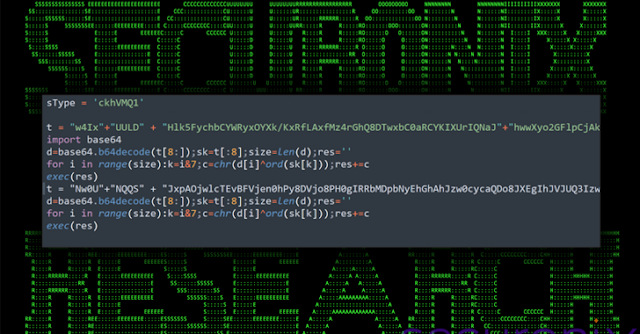
An ongoing social engineering campaign is targeting software developers with bogus npm packages under the guise of a job interview to trick them into downloading a Python backdoor. NPM is a package manager for the JavaScript programming language maintained by Microsoft's npm, Inc. npm is the default package manager for the JavaScript runtime environment Node.js and is included as a recommended feature in the Node.js installer. Wikipedia Cybersecurity firm Securonix is tracking the activity under the name DEV#POPPER, linking it to North Korean threat actors. "During these fraudulent interviews, the developers are often asked to perform tasks that involve downloading and running software from sources that appear legitimate, such as GitHub," security researchers Den Iuzvyk, Tim Peck, and Oleg Kolesnikov said . "The software contained a malicious Node JS payload that, once executed, compromised the developer's system." Details of the campaign first emerged in l...

CISA orders agencies impacted by Microsoft hack to mitigate risks

Image
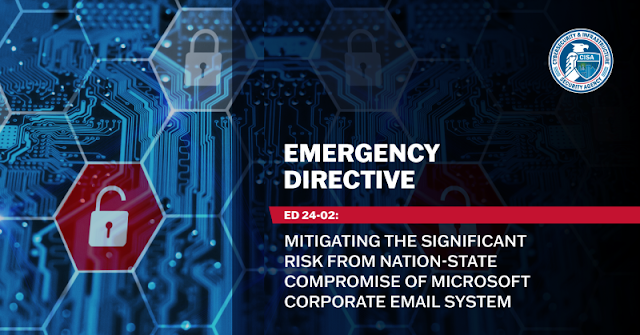
By Sergiu Gatlan, Bleeping Computer CISA has issued a new emergency directive ordering U.S. federal agencies to address risks resulting from the breach of multiple Microsoft corporate email accounts by the Russian APT29 hacking group. Emergency Directive 24-02 was issued to Federal Civilian Executive Branch (FCEB) agencies on April 2. It requires them to investigate potentially affected emails, reset any compromised credentials (if any), and take measures to secure privileged Microsoft Azure accounts. CISA says Russian Foreign Intelligence Service (SVR) operatives now use information stolen from Microsoft's corporate email systems, including the authentication details shared between Microsoft and its customers by email, to gain access to certain customer systems. "This Emergency Directive requires immediate action by agencies to reduce risk to our federal systems. For several years, the U.S. government has documented malicious cyber activity as a standard part of the Russian ...

Microsoft warns Gmail blocks some Outlook email as spam, shares fix

Image
By Sergiu Gatlan,  Bleeping Computer Microsoft has confirmed that some Outlook.com users are experiencing issues with emails being blocked and marked as spam when trying to email Gmail accounts. This known issue only impacts users with Outlook.com country domains, according to a support document published by Redmond on Tuesday. Affected Outlook users are being told in follow-up emails from Gmail's servers that their messages were suspicious and have been stopped from reaching the recipient's inbox. "Remote server returned message detected as spam [..]. Gmail has detected that this message is likely suspicious due to the very low reputation of the sending domain. To best protect our users from spam, the message has been blocked," the replies from Gmail's mail server (mx.google.com) explain. Google's support website says that it's very likely that only a subset of these messages are being blocked because they have "a strong likelihood of being spam....

New MFA-bypassing phishing kit targets Microsoft 365, Gmail accounts

Image
By Bill Toulas,  Bleeping Computer Cybercriminals have been increasingly using a new phishing-as-a-service (PhaaS) platform named 'Tycoon 2FA' to target Microsoft 365 and Gmail accounts and bypass two-factor authentication (2FA) protection. Tycoon 2FA was discovered by Sekoia analysts in October 2023 during routine threat hunting, but it has been active since at least August 2023, when the Saad Tycoon group offered it through private Telegram channels. The PhaaS kit shares similarities with other adversary-in-the-middle (AitM) platforms, such as Dadsec OTT, suggesting possible code reuse or a collaboration between developers. In 2024, Tycoon 2FA released a new version that is stealthier, indicating a continuous effort to improve the kit. Currently, the service leverages 1,100 domains and has been observed in thousands of phishing attacks.

Massive Microsoft 365 outage caused by faulty ECS deployment

By Sergiu Gatlan,  Bleeping Computer In a preliminary post-incident report, Microsoft has revealed that this week's 5-hour-long Microsoft 365 worldwide outage was triggered by a faulty Enterprise Configuration Service (ECS) deployment that led to cascading failures and availability impact across multiple regions. ECS is an internal central configuration repository designed to enable Microsoft services to make wide-scope dynamic changes across multiple services and features, as well as targeted ones such as specific configurations per tenant or user. What initially started like a minor Microsoft Teams outage ended up expanding downstream to multiple Microsoft 365 services with Teams integration that also leverage ECS, including Exchange Online, Windows 365, and Office Online. As a result, users worldwide began reporting that they could not use Microsoft Teams and multiple Microsoft 365 services or features. "This issue affected the users' ability to connect to the Microsoft...

A Deep Dive Into the Residential Proxy Service ‘911’

By  Krebs On Security For the past seven years, an online service known as 911 has sold access to hundreds of thousands of Microsoft Windows computers daily, allowing customers to route their Internet traffic through PCs in virtually any country or city around the globe — but predominantly in the United States. 911 says its network is made up entirely of users who voluntarily install its “free VPN” software. But new research shows the proxy service has a long history of purchasing installations via shady “pay-per-install” affiliate marketing schemes, some of which 911 operated on its own. 911[.]re is one of the original “residential proxy” networks, which allow someone to rent a residential IP address to use as a relay for his/her Internet communications, providing anonymity and the advantage of being perceived as a residential user surfing the web. From a website’s perspective, the IP traffic of a residential proxy network user appears to originate from the rented residential IP a...

Log4j software flaw ‘endemic,’ new cyber safety panel says

 By Alan Suderman,  AP A computer vulnerability discovered last year in a ubiquitous piece of software is an “endemic” problem that will pose security risks for potentially a decade or more, according to a new cybersecurity panel created by President Joe Biden. The Cyber Safety Review Board said in a report Thursday that while there hasn’t been sign of any major cyberattack due to the Log4j flaw, it will still “be exploited for years to come.” “Log4j is one of the most serious software vulnerabilities in history,” the board’s chairman, Department of Homeland Security Under Secretary Rob Silvers, told reporters Wednesday. The Log4j flaw, made public late last year, lets internet-based attackers easily seize control of everything from industrial control systems to web servers and consumer electronics. The first obvious signs of the flaw’s exploitation appeared in Minecraft, a hugely popular online game owned by Microsoft. The flaw’s discovery prompted urgent warnings by governme...

Microsoft: Phishing bypassed MFA in attacks against 10,000 orgs

Image
By Sergiu Gatlan,  Bleeping Computer Microsoft says a massive series of phishing attacks has targeted more than 10,000 organizations starting with September 2021, using the gained access to victims' mailboxes in follow-on business email compromise (BEC) attacks. The threat actors used landing pages designed to hijack the Office 365 authentication process (even on accounts protected by multifactor authentication (MFA) by spoofing the Office online authentication page. In some of the observed attacks, the potential victims were redirected to the landing pages from phishing emails using HTML attachments that acted as gatekeepers ensuring the targets were being sent via the HTML redirectors. After stealing the targets' credentials and their session cookies, the threat actors behind these attacks logged into the victims' email accounts. They subsequently used their access in business email compromise (BRC) campaigns targeting other organizations. "A large-scale phishing cam...

Microsoft Shows Its Power Against Russia

By Ellen Chang,  The Street Tech giant Microsoft  (MSFT) - Get Microsoft Corporation Report provided tech and monetary assistance to Ukraine as it fought against cyber attacks from Russia.  The company made both financial and technological commitments to Ukraine as it was invaded by Russia in February. Microsoft promised a total of $239 million in assistance, including $107 million to "literally move the government and much of the country of Ukraine from on-premises servers to the cloud," Microsoft President Brad Smith said in an interview with GeekWire last week at his office in Redmond, Washington. The Russian government has engaged in malicious cyber activities to suppress various political and social activity, according to the Cybersecurity and Infrastructure Security Agency (CISA). The Russian state-sponsored cyber actors have the ability to "compromise IT networks; develop mechanisms to maintain long-term, persistent access to IT networks; exfiltrate sensitive data...

Russian Hackers Continue Brutal Ukraine Cyber-Assault But Microsoft Is Fighting Back

By Nathan Wasson,  Hot Hardware Shortly after Russia invaded Ukraine near the beginning of this year, some prominent hacking groups announced that they would be joining the war within the digital realm. The hacking collective Anonymous declared cyberwar against the Russian government and has since been conducting cyberattacks on Russian and Belarusian government websites, news channels, and military operations systems. On the other side of the conflict is the Conti ransomware gang, which announced its full support of the Russian government and intention to strike back against Western cyber operations. The Russian-speaking ransomware group has since broken up and abandoned the Conti name, but other Russian-based hacking groups are still conducting cyberattacks on Ukraine and its Western allies. Microsoft is also participating in the conflict by joining the ongoing sanctions on Russia. Microsoft halted sales in Russia near the outset of the war, but, just last week, Microsoft began b...

Toll fraud malware continues to evolve, says Microsoft: Here's how Android users can protect themselves

Toll fraud, one of the most prevalent types of Android malware, continues to evolve. In a blog post on Thursday, the Microsoft 365 Defender Research Team revealed the details of this threat - how it operates, how analysts can better identify such threats, and how Android security can be improved to mitigate this threat. According to Microsoft's blog, toll fraud malware is a subcategory of billing fraud in which malicious applications subscribe users to premium services without their knowledge or consent. The malware accounted for 34.8% of installed Potentially Harmful Application (PHA) from the Google Play Store in the first quarter of 2022, ranking second only to spyware. The malware has unique behaviors. While SMS or call frauds use a simple attack flow to send messages or calls to a premium number, toll fraud has a complex multi-step attack flow that malware developers continue to improve. Microsoft security researchers observed new capabilities related to how this threat target...

Clever phishing method bypasses MFA using Microsoft WebView2 apps

By Lawrence Abrams,  Bleeping Computer A clever, new phishing technique uses Microsoft Edge WebView2 applications to steal victim's authentication cookies, allowing threat actors to bypass multi-factor authentication when logging into stolen accounts. With the large number of data breaches, remote access trojan attacks, and phishing campaigns, stolen login credentials have become abundant. However, the increasing adoption of multi-factor authentication (MFA) has made it difficult to use these stolen credentials unless the threat actor also has access to the target's one-time MFA passcodes or security keys. This has led to threat actors and researchers coming up with new ways of bypassing MFA, including zero-day website vulnerabilities, reverse proxies, and clever techniques, such as the Browser in the Browser attack and utilizing VNC to display remote browsers locally. This week, cybersecurity researcher mr.d0x has created a new phishing method that uses Microsoft Edge WebView2...

Russian govt hackers hit Ukraine with Cobalt Strike, CredoMap malware

By Bill Toulas,  Bleeping Computer The Ukrainian Computer Emergency Response Team (CERT) is warning that Russian hacking groups are exploiting the Follina code execution vulnerability in new phishing campaigns to install the CredoMap malware and Cobalt Strike beacons. The APT28 hacking group is believed to be sending emails containing a malicious document name "Nuclear Terrorism A Very Real Threat.rtf.". The threat actors selected the topic of this email to entice recipients to open it, exploiting the fear that's spread among Ukrainians about a potential nuclear attack. Threat actors also used a similar tactic in May 2022, when CERT-UA identified the dissemination of malicious documents warning about a chemical attack. The RTF document used in the APT28 campaign attempts to exploit CVE-2022-30190, aka "Follina," to download and launch the CredoMap malware (docx.exe) on a target's device. This vulnerability is a flaw in the Microsoft Diagnostic Tool, exploite...

Recent Windows Server updates break VPN, RDP, RRAS connections

By Sergiu Gatlan,  Bleeping Computer This month's Windows Server updates are causing a wide range of issues, including VPN and RDP connectivity problems on servers with Routing and Remote Access Service (RRAS) enabled. RRAS is a Windows service that offers additional TCP connectivity and routing features, including remote access or site-to-site connectivity with the help of virtual private network (VPN) or dial-up connections. Last week, Microsoft released the Windows Server 2019 2012 R2 KB5014746, the Windows Server 2019 KB5014692, the Windows Server 20H2 KB5014699, and the Windows Server 2022 KB5014678 updates as part of the June 2022 Patch Tuesday. However, after deploying these recent updates, Windows admins have reported experiencing multiple issues that could only be resolved after completely uninstalling the updates. One of the more severe problems is the servers freezing for several minutes after a client connects to the RRAS server with SSTP.

Microsoft 365 credentials targeted in new fake voicemail campaign

By Bill Toulas,  Bleeping Computer A new phishing campaign has been targeting U.S. organizations in the military, security software, manufacturing supply chain, healthcare and pharmaceutical sectors to steal Microsoft Office 365 and Outlook credentials. The operation is ongoing and the threat actor behind it uses fake voicemail notifications to lure victims into opening a malicious HTML attachment. Campaign overview According to researchers at cloud security company ZScaler, the recently discovered campaign shares tactics, techniques, and procedures (TTPs) with another operation analyzed in mid-2020. The threat actors leverage email services in Japan to route their messages and spoof the sender's address, making it look like the emails come from an address belonging to the targeted organization. The email has an HTML attachment that uses a music note character in the naming to make it appear as if the file is a sound clip. In reality, the file contains obfuscated JavaScript code th...