Posts

Showing posts with the label Microsoft Edge

Clever phishing method bypasses MFA using Microsoft WebView2 apps

By Lawrence Abrams,  Bleeping Computer A clever, new phishing technique uses Microsoft Edge WebView2 applications to steal victim's authentication cookies, allowing threat actors to bypass multi-factor authentication when logging into stolen accounts. With the large number of data breaches, remote access trojan attacks, and phishing campaigns, stolen login credentials have become abundant. However, the increasing adoption of multi-factor authentication (MFA) has made it difficult to use these stolen credentials unless the threat actor also has access to the target's one-time MFA passcodes or security keys. This has led to threat actors and researchers coming up with new ways of bypassing MFA, including zero-day website vulnerabilities, reverse proxies, and clever techniques, such as the Browser in the Browser attack and utilizing VNC to display remote browsers locally. This week, cybersecurity researcher mr.d0x has created a new phishing method that uses Microsoft Edge WebView2...

Google's TAG provides update on cybersecurity activity in Eastern Europe

Image
By  Dev Discourse Google's Threat Analysis Group (TAG) has observed a continuously growing number of threat actors using the Russia-Ukraine conflict as a lure in phishing and malware campaigns and targeting critical infrastructure entities including oil and gas, telecommunications and manufacturing. "Government-backed actors from China, Iran, North Korea and Russia, as well as various unattributed groups, have used various Ukraine war-related themes in an effort to get targets to open malicious emails or click malicious links. Financially motivated and criminal actors are also using current events as a means for targeting users," TAG wrote in a blog post . Below is the campaign activity observed by Google's TAG: APT28 or Fancy Bear, a threat actor attributed to Russia GRU, was seen targeting users in Ukraine with a new variant of malware which was distributed via email attachments inside of password-protected zip files (ua_report.zip). The malware is a .Net executable...

Hands on with Microsoft Edge's new built-in VPN feature

Image
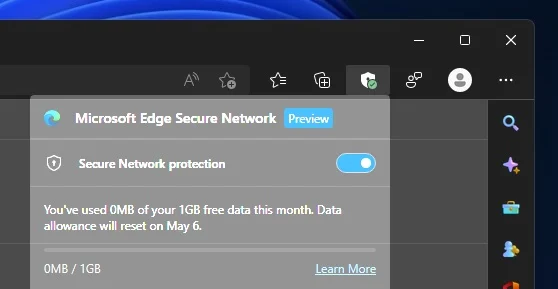
By Mayank Parmar, Bleeping Computers Microsoft is working on a built-in VPN functionality for the Edge browser called ' Edge Secure Network ', but there's a catch - it is not a proper replacement for your VPN. Edge's Secure Network is powered by Cloudflare - one of the most trusted DNS hosts in the industry - and it aims to protect your device and sensitive data as you browse. The feature is in the early stage of development available to select users in Edge Canary and it's not a full-fledged VPN service offered in rival browsers like Opera. So how does Microsoft Edge's Secure Network actually work? As per the support document and our tests, Edge uses Cloudflare's routing to encrypt your internet connection and protect your data from online threats like hackers. Microsoft says Edge Secure network feature sends your traffic through an encrypted tunnel to create a secure connection, which means even HTTP URLs are accessed securely in a bid to make it harder ...

The Latest Microsoft Edge Update Cuts RAM and CPU Usage with a Neat Trick

Image
Late last year, Microsoft Edge gained a battery-saving mode that reduces the browsers’ demand for system resources. But this “Energy Saver” also slows Edge a bit, hampering the browsing experience. That’s why the latest Edge update takes a more proactive approach to efficiency by improving the sleeping tabs feature. Microsoft Edge gained “sleeping tabs” in late 2021 with the version 89 update. The feature is pretty simple—if you aren’t using a tab, it goes to “sleep,” reducing the browser’s overall CPU and RAM usage by 99% and 85% per tab (according to Microsoft, that is). Tab sleeping happens without the user’s knowledge, as tabs reactivate the second you click them. But the Edge version 100 update takes things a step further. On average, 8% more tabs will fall asleep, as Edge now targets “pages that are sharing a browsing instance with another page.” Yeah, Microsoft’s wording is pretty weird here—our educated guess, for what it’s worth, is that the company is talking about browser co...